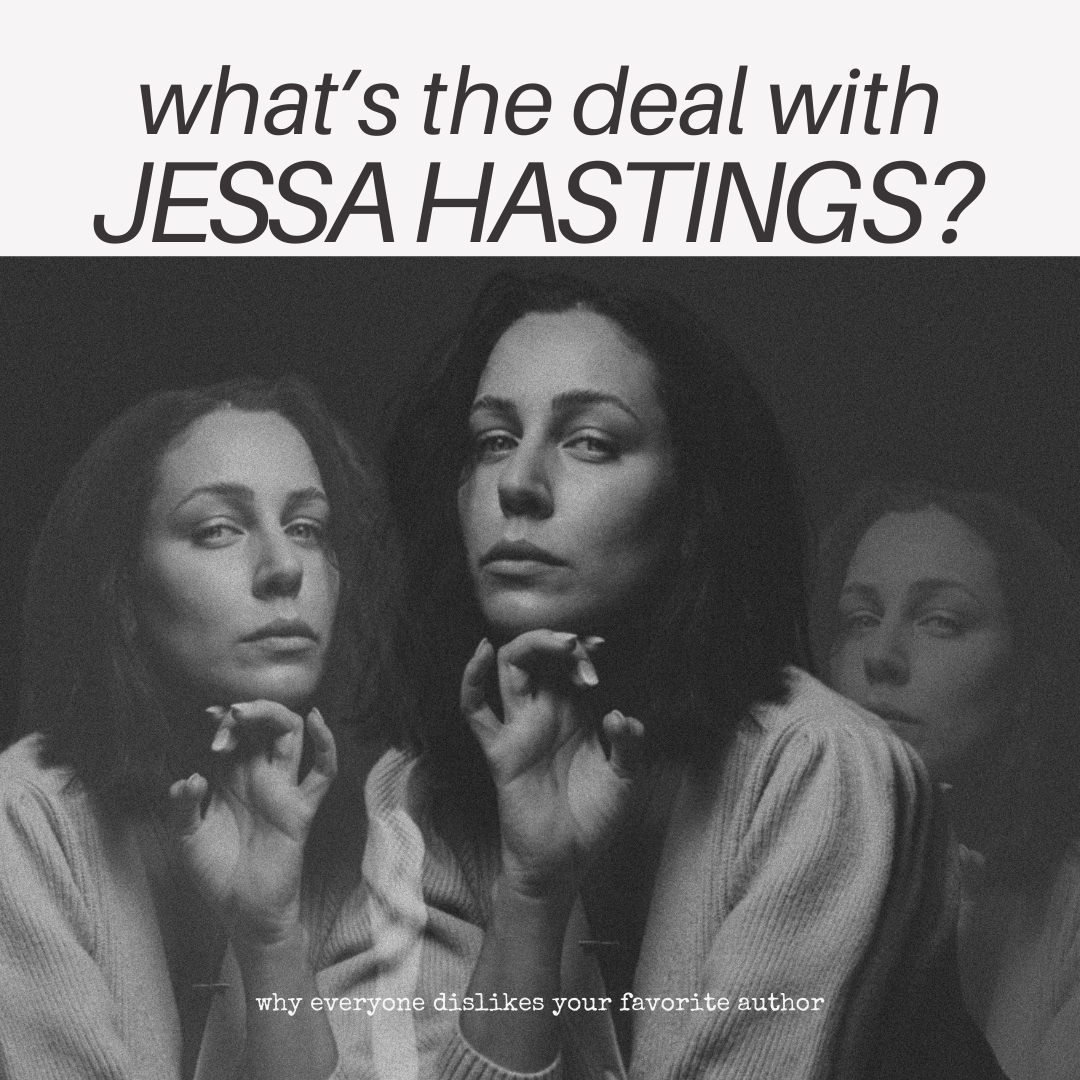
Jessa Hastings’ Magnolia Parks series has created a devoted fan base anxiously awaiting every new release from the author. So much so that Magnolia Parks is being adapted into a television series by the entertainment company A24. Unlike many authors, Hastings even has a subreddit dedicated to the series that boasts nearly 2,000 members.
However, people regularly place Hastings’ name on DNR (Do Not Read) lists for items such as racism, Zionism, and regular conflicts with her readers. Most recently, the author came under fire for sharing AI generated character art and subsequently threatening to kill off a well-loved character when fans reacted poorly to the use of AI. This has led to a resurgence of accusations against the author across social media. Are those accusations warranted? Let’s discuss.
Magnolia Parks
Hastings wrote Magnolia, the title character of the Magnolia Parks series, as a biracial woman with a Black father and a Russian mother. In March 2025, Hastings shared an AI generated image of Magnolia and BJ, the primary love interests of the Magnolia Parks series. Swiftly, readers began leaving comments on Hastings’ post, criticizing the author for choosing AI over hiring an actual artist.
Many people are staunchly against the use of generative AI for a variety of reasons, including theft, as AI art generators are regularly trained on the work of human artists without their permission.1 Further, AI requires a significant amount of water2 to function in addition to the exploitation of workers used to train the AI.3


In her Instagram stories, Hastings explained she had intended to start ‘instagramming as Magnolia’ and generated an image of the couple to ensure that Magnolia’s skin color would be correct. Some readers argued that this excuse was rather flimsy as both characters in the image had the same skin tone and some readers thought the character of Magnolia was a white woman.
It is important to note that these generators show incredible bias when depicting people in their generated ‘art.’4If Hastings was concerned about Magnolia’s skin color depiction, hiring a human artist would have made far more sense. Further, it is alleged that Hastings has previously admitted to using ChatGPT for research, which shows that the author is likely somewhat dependent on AI.
This story was just one of a lengthy tirade against readers in which Hastings called readers ‘meanies’ who were ‘determined to see the worst in any given thing’. During this tirade, Hastings would also threaten to kill off the character of Julian, who is often shipped with Magnolia.
Conflicts With Readers
This is not the first time Hastings has come into conflict with her readers or the first time she has threatened to kill off the character Julian. Fans know that Hastings is incredibly active on social media and regularly engages with her fans. However, these interactions are not always positive.
Hastings has regularly spoken of the disrespect she feels from fans asking for the next installment of her series or pushing for Julian and Magnolia to be together. Some readers speculate Hastings has intense reactions to Julian fans as BJ and Magnolia are reportedly based on Hastings and her husband.
Fans of the author regularly discuss the her online behavior in the Magnolia Parks subreddit and other online spaces. Many of them complain about her responses to Q&A sessions in which they feel she responds to questions rudely.
“She gets so snarky about so many random things. She loves that people love her series but she hates talking about it. I don’t understand it at all.” -u/ProfessorBeeBop on Reddit.
It’s clear that Hastings wants to interact with her readers, but it is also clear that the dynamic she has created with her fans has a negative impact on the author. She has spoken about the difficulties she faces with writing due to fans who feel ‘entitled to demand certain things’ from her. While there is no doubt that the author deals with rude fans, it appears from many reader discussions that Hastings can be combative.
Religious Views
Critics accuse Hastings’ recent release, The Conditions of Will, of blasphemy because of its controversial cover and subject matter. The Conditions of Will follows Georgia, a twenty-something ‘professional lie-detector and body-language savant’ as she returns to her family home after the passing of her father.
A quick look at this book on Goodreads will show you a handful of reviews primarily discussing the cover, which one reviewer states is, “-so blasphemous towards Catholics and Our Lady of Fatima.”
Other reviewers express anger at the author for ‘bashing Christians’ and feel that Hastings is a hypocrite for writing such a book while married to a worship leader. Her husband, Benjamin William Hastings, is a singer songwriter with the Capitol Christian Music Group. His biography on the website even shares that he joined a music group composed of Jessa’s friends. This group was Hillsong United, who formed within the infamous Hillsong Church.
Hillsong Church is a mega-church often embroiled in controversies from sexual abuse accusations to shady financial dealings. Hillsong Church widely promotes anti-LGBTQIA+ and anti-abortion views.5
In The Conditions of Will, it is made clear that both Georgia and her gay brother Oliver have experienced significant suffering and alienation from their family. The book confronts the family’s homophobia toward Oliver and is fairly critical of the other family members. While the book clearly doesn’t attempt to sugarcoat the harm done to both Oliver and Georgia due to the family’s faith, I didn’t find it overly critical of religion at all.
Georgia even gives a testimony of ‘her God,’ “And I think he loves everyone, and he wants everyone to be okay, and I think almost everyone who is, like, earnestly seeking God—people aren’t seeking that out of ego; they’re looking for the meaning of life and they’re looking beyond themselves for it—and, I mean, I don’t know anything, except that I think God is the kind of guy who when someone dies, he’ll sit there and sift through every heartfelt thought, every drunken prayer, every desperate plea for help, every Mumford & Sons song that you’ve sung to look for a hint of a confession that you believe in him.”

Hastings appears to have more progressive views that those of Hillsong, but her views expressed online regarding abortion show that she still has significant work to do. In response to a Q&A question asking for her views on abortion, Hastings expressed the following,
“-I think it’s murky. Would I get an abortion personally? No. But do you know what, I come from a wealthy first world family, I have free healthcare, I have a supportive partner and I have easy access to birth control. My life experience is very different to the vast majority of people on the earth, I was born into privilege, and not acknowledging that is stupid and dangerous – Now, gun to my head, am I pro life or pro choice? If you’re forcing me to give and black and white answer, the answer is pro life. But that’s if you’re making me choose between black and white, when really the answer is grey. The answer is nuanced because life is nuanced. I’ve never been assaulted, I’ve never been poor, I’ve never been in an abusive relationship, I’ve never had to worry about medical bills – but this is not the vast majority’s reality. I don’t think we can say we’re pro life without being pro all life, until we’re giving women better avenues to adopt out these babies, until there’s free healthcare for everyone, until we’re providing families with postnatal care – if you are pro life there is a duty of care you have (YOU PERSONALLY) that extends beyond babies in tummy’s, but to babies in broken homes, to babies who are unwanted when they arrive, to mothers who didn’t want to have babies, to mothers who can’t feed the babies she already has, to women who can’t afford their hospital bills-you can’t pick and choose. Pro life means you’re pro all lives, all the time.
I will say this also, I don’t think it’s as simple “my body, my choice”, I think that’s wrong and a reactionary statement that women spout when they feel their voice is being silenced. I think it goes much further and wider than “my body, my choice” and I think there are circumstances where women have every right in the world to say that, but I don’t think it’s necessarily true as a blanket statement. I don’t think the phrase does pro choicers any favours either because it comes off quite callous and unconsidered, when actually I think you’ll find most women getting an abortion have considered every other option before arriving there. I’ll add this: I don’t think there’s a person in the world—IN THE WORLD-who wakes up and thinks to themselves “yes, I’m so glad I get to have an abortion today”. I don’t think anyone wants that.
So what are my thoughts on abortion to recap? Of course I’d rather all babies lived – of course, who wouldn’t? If I’m black and whiting it – I’m pro life but there is a gun to my head and I’m not comfortable with it because no matter what I think, whatever I think I think it because I’m privileged. I know that I have a very first world experience of life and that experience hedges my thoughts and options and choices JUST AS MUCH AS SOMEONE WHO DOESNT COME FROM PRIVILEGE IS HEDGED BY THEIR EXPERIENCES… I think it’s nuanced and grey, and I think we as a society need to treat it as such. And guys please be gentle when you discuss it, be kind to one another. You don’t know what people have been through, you don’t know why or how. Have opinions if you want to but be kind when you engage with others. When you’re talking to people about this, try talk to them how you would if Jesus was sitting right behind you, auditing everything you said.”
While for many this may seem to be a very measured view, it comes across to me as one that rings hollow while hitting all of the right talking points. Referring to the slogan ‘my body my choice’ as callous and unconsidered shows Hastings hand- there are significant limits to her support of bodily autonomy. Not wanting to be pregnant will always be enough of a reason.
NOTE: I also had major issues with the way mental health issues were written in The Conditions of Will and plan to post a review going more in depth about the book.
Book Controversies
Hastings’ writing also shows she has further deconstruction to do regarding her views on gay men. While reading The Conditions of Will, it was rather glaring to me that the author views gay men as objects- the perfect accessory for a straight woman. Upon meeting her love interest, Sam, Georgia immediately decides he is gay because he is so attractive. She quickly assumes he’s her brother’s boyfriend and begins sexually harassing him. Georgia tells him he’s attractive, guesses his height, and starts pulling his sleeves up to examine his tattoos. Her reasoning for this? Her social inhibitions melt away around gay people because she inherently trusts them more.
Another reviewer notes that Magnolia Parks uses the Gay Man Accessory trope with the character Perry, who they feel was Magnolia’s accessory without ‘personality or purpose’ outside of being her friend. The reviewer goes on to state that this was repeated in Daisy Haites.
The Conditions of Will also sets Georgia’s brother up as obsessed with Sam in order to pit Georgia against her brother. Further, it uses the ‘secretly gay’ trope as a plot twist for one of the family members.
“It’s supposed to be pro lgbtq, but honestly, it came off as quite homophobic. The way the author portrays gay characters feels incredibly stigmatizing and just full of outdated stereotypes. You know that harmful belief some straight men have, where they assume gay men will automatically fall in love with them just because they’re men? This book doesn’t just include that idea, it amplifies it. The gay character is made out to be the villain, insufferable, and even childish, simply because he doesn’t want his friend to date his sister… all because he has feelings for the friend, who he knows is straight.” – Anna on Goodreads


Other book related controversies include:
- The ‘f’ slur used multiple times in Daisy Haites, the second installation in the Magnolia Parks series. Specifically, during a scene at a club on of the characters is called the slur and a main character repeats it more than once. Although the author portrays her as angry about it, it’s curious that the author repeated the slur instead of having the character say “the f-word.”
- An argument over the phrase ‘so tan he looks dirty’ as being racist in the book Never, which is a Peter Pan retelling also criticized for what readers feel is a predatory relationship between Peter and the underage FMC. The author posted an apology/explanation on Instagram in which she clarified she would make corrections and stated, “As a storyteller, one of the greatest joys of my life to date has been creating characters who so many of you have loved and championed because of what they represent to everyone, especially us bi-racial people.”
- A quote from Magnolia Parks Into the Dark refers to making a donation to the Jewish National Fund in a positive manner. This has led to accusations of Zionism as the JNF is a Zionist organization.
- Other reviewers have expressed frustration that Magnolia’s father, a Black man, is written as a big scary Black man to the other characters. Additionally, he’s said to be characterized as unfaithful and a terrible father figure.
“Do you know what it’s like to date the daughter of a big, burly black guy who has 50 Cent on speed dial? High stress, man-that’s what it’s like. I spent her seventeenth birthday party sweating fucking bullets because I’m pretty sure her dad told Kendrick Lamar and Travis Scott to stare me down and keep me in line.” – Magnolia Parks by Jessa Hastings
Where does this leave readers?
In response to criticism of her personal and political views, Hastings has removed many of the highlights and posts on her Instagram discussing said views. As such, it was rather difficult for me to confirm some rumors such as the author’s alleged support of 45. I have seen readers state that they had seen the posts themselves, but have been unable to find screenshots.
Regardless, simply reading one of Hastings’ books in combination with reviews of her other books has made it clear that Hastings has significant work to do. Her attitudes towards queer folks, women, and mental health issues are questionable at best in combination with her history with Hillsong Church.
Citations
1https://web.archive.org/web/20250414211129/https://www.newyorker.com/culture/infinite-scroll/is-ai-art-stealing-from-artists
2https://web.archive.org/web/20250426105444/https://apnews.com/article/chatgpt-gpt4-iowa-ai-water-consumption-microsoft-f551fde98083d17a7e8d904f8be822c4
3https://time.com/6247678/openai-chatgpt-kenya-workers/
4https://www.snexplores.org/article/ai-image-generators-bias



Leave a Reply